PLATFORMS
Social Commerce Platforms Compared: Where Shoplinky Fits in 2026
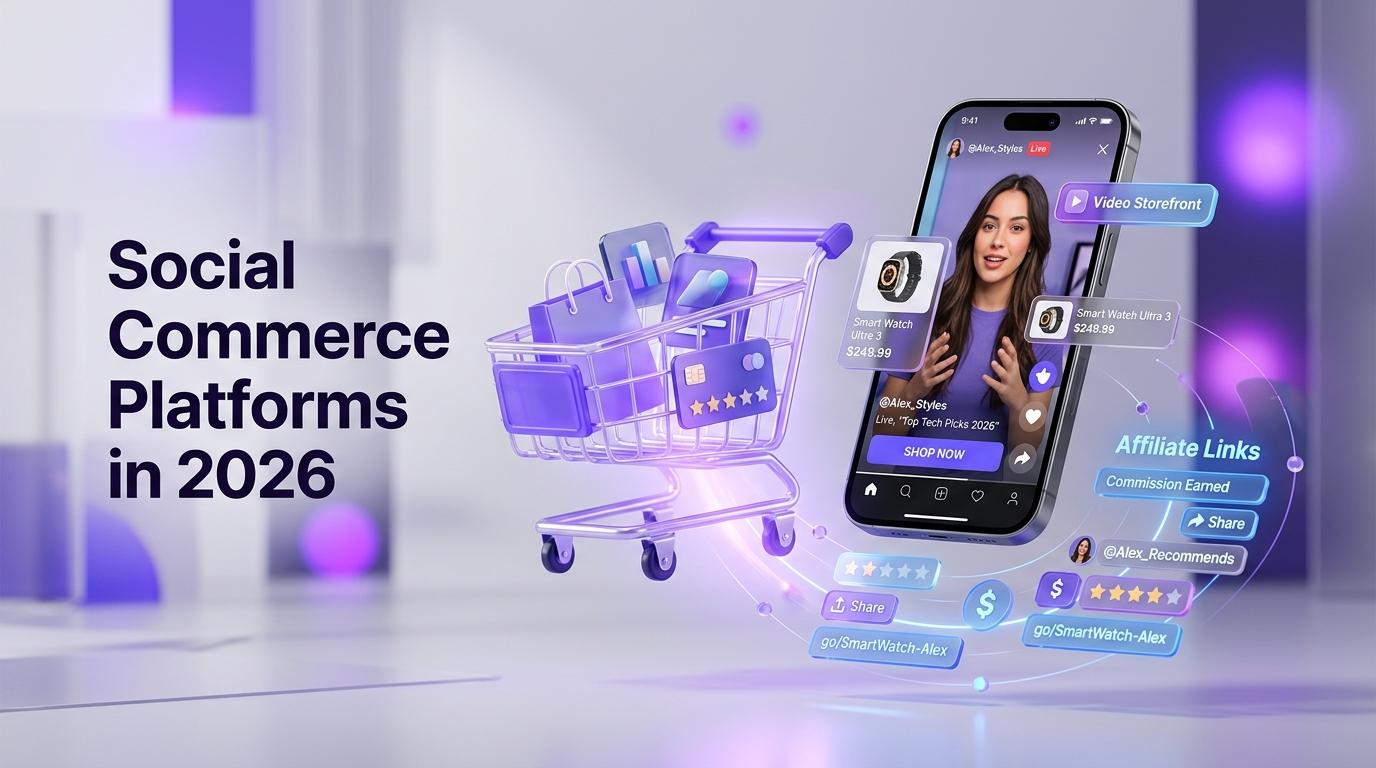
Social commerce is the buying and selling of products through creators, influencers, and user-generated content instead of traditional ads. If you are a brand or a creator trying to pick a platform, the fastest way to decide is to know which category you actually need. There are three main categories: native shopping platforms, affiliate storefront networks, and brand-owned creator commerce tools like Shoplinky. This guide breaks down each one so you can choose with confidence.
What is Social Commerce, Exactly
Social commerce turns content into a checkout point. A creator posts a video, a photo, or a curated list, and the audience buys directly from that content or a linked storefront. It is different from running a normal influencer campaign because the sale itself happens inside or right next to the content, not three clicks away on a brand's website.
Three groups of platforms have grown up around this idea, and each one solves a different problem.
Category 1: Native Shopping Platforms
These are built into the social apps people already use. TikTok Shop, Instagram Shopping, YouTube Shopping, and Pinterest all let users buy without leaving the app.
Strengths
- Huge built-in audiences: Instant access to hundreds of millions of daily active users already consuming content.
- Low friction checkout: In-app payment systems reduce drop-offs and streamline the buying process.
- Strong for impulse purchases and viral moments: Perfect for trending items, flash sales, and live shopping streams.
Limitations
- Renting attention on someone else's platform: You do not own the direct customer relationship or underlying channel.
- Limited control over customer data: Restrictive policies on email and customer data capture hinder long-term retention.
- Algorithm volatility: Platform algorithm shifts can drastically change your visibility and sales velocity overnight.
Best for: Brands that already have a strong short-video presence and want high sales volume fast.
Category 2: Affiliate Storefront Networks
This is where LTK, ShopMy, and similar platforms operate. Creators build a personal storefront, add affiliate links to products across many brands, and earn a commission when followers buy.
LTK runs one of the largest networks in this space, with a shopper-facing app and an invite-based creator program that generally expects an established following. ShopMy takes a more open approach with no follower minimum, a web-first storefront, and commissions that typically run higher on a per-brand basis. Creators often use both at once: LTK for reach and community, ShopMy for flexibility and faster payouts.
Strengths
- Ready-made creator networks: Pre-onboarded creators actively browsing for products to feature in their content.
- Consumer-facing shopping destinations: Built-in audiences of high-intent shoppers searching for recommendations.
- Established trust with shoppers: Familiar interface and trusted multi-brand checkout experiences.
Limitations
- One of many labels in someone else's marketplace: Your brand competes directly against rivals in a shared directory.
- Less control over commission structure: Rigid platform frameworks with limited room for custom agreements or milestone bonuses.
- Thin reporting outside the ecosystem: Data attribution and cross-platform analytics are often gated or limited.
Best for: Brands in fashion, beauty, and lifestyle categories chasing broad creator reach across multi-brand catalogs.
Category 3: Brand-Owned Creator Commerce Platforms
This is where Shoplinky sits, and it solves a different problem than the two categories above. Instead of listing your products inside someone else's marketplace, Shoplinky lets you run your own affiliate and creator program directly from your store.
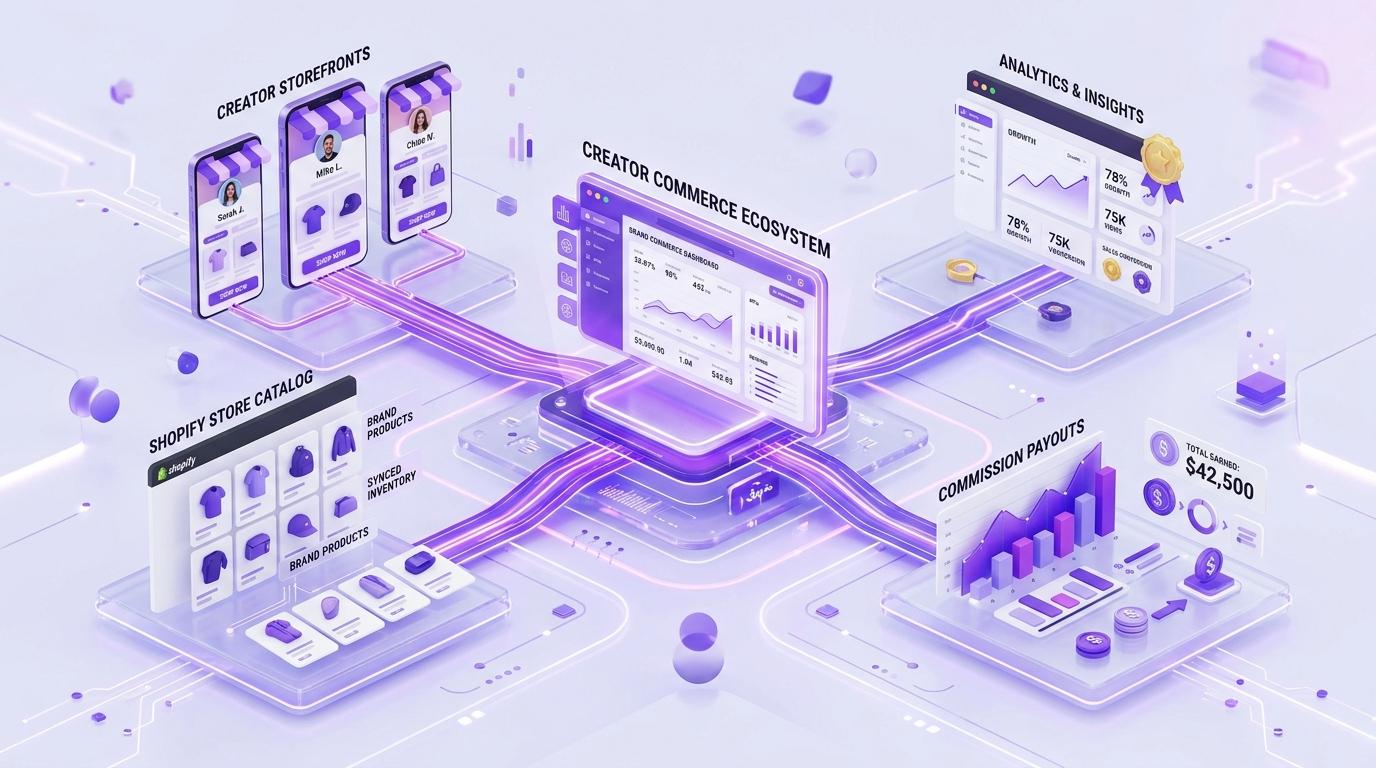
Brand-owned creator commerce connects your product catalog, creator storefronts, and automated payouts directly into your own ecosystem.
Here is what that looks like in practice:
- Product-based commissions you control: Brands import their product catalog, set commission percentages per product or per creator, and publish offers to their own affiliate marketplace, rather than competing for visibility inside a third-party app.
- Flexible payment models: Shoplinky supports affiliate commissions, fixed-fee collaborations, milestone-based payouts, gifting reimbursements, and hybrid structures, all tracked and calculated automatically from connected sales data (Shopify, Amazon, or custom links).
- Native Shopify integration: Because Shoplinky is built for Shopify merchants, commission tracking pulls directly from real sales data, which cuts down on manual reconciliation and payout errors.
- Creator storefronts with AI Collab: Creators get their own shoppable storefront and can use Shoplinky's AI Collab tool to match with brands and monetize content, without needing a separate app download for shoppers.
- Full ownership of the relationship: Every affiliate, every commission rate, and every payout history stays inside your own system. You are not renting a spot in someone else's directory.
Quick Comparison
| Platform Category | Key Platforms | Storefront Control | Commission Structure | Best For |
|---|---|---|---|---|
| Native Shopping Platforms | TikTok Shop, Instagram Shopping, YouTube Shopping | App-controlled (in-app checkout) | App-set or seller-set platform rates | High-volume impulse buys & viral product moments |
| Affiliate Storefront Networks | LTK, ShopMy, Amazon Influencer | Platform-controlled marketplace app | Platform-determined ranges (typically 5% – 30%) | Broad creator reach in fashion, beauty & lifestyle |
| Brand-Owned Commerce Platforms | Shoplinky | Brand-owned store & creator links | 100% customizable per product, tier, or creator | Shopify merchants seeking owned relationships & flexible payouts |
Ready to run an owned creator & affiliate commerce program?
Get Started with ShoplinkySo, Which One Should You Use
If you want maximum reach fast and do not mind sharing the spotlight, native shopping platforms and affiliate networks like LTK or ShopMy get you in front of large, ready-made audiences quickly.
If you want a program you actually own, with commission structures you set, payout flexibility beyond a flat affiliate rate, and direct integration with your Shopify sales data, that is exactly what Shoplinky is built for. Many brands end up running both: an affiliate network for discovery, and a Shoplinky-powered program for the creators who become long-term partners.